

Dryad's Saddle
Riding Between Realms

Cerioporus squamosus, formerly Polyporus squamosus
Dryad’s Saddle aka Pheasant Back Mushroom
Let Us Ride Into the Year of the Horse on this Myth
The name dryad’s saddle hearkens back to ancient Greece. Dryad refers to tree nymphs from Greek mythology. The name dryad originates from the Greek word drys, meaning oak tree. Though there is an infamous dryad who occupies oak trees, the term dryad has come to signify tree spirits in general, not just the spirit who lives in the oak.
Dryads are among the nymphs of Greek myth. There is a nymph for every natural feature important to an ecosystem. Dryads are portrayed as beautiful women in forms reminiscent of humans, symbolizing the need for balance between humanity and the natural world.
Though drawing inspiration from ancient tales, the lore of this saddle-shaped mushroom was spun quite recently. The story goes that dryads fly about on these steeds. If you find one in the morning it means that they were patrolling the grove you’re foraging in. A sure sign of a healthy woodland.
And to an ecologist, spotting lots of wood decay fungus is a reassuring sign. Where a parasitic mushroom takeover can mean that this forest will soon be felled, the presence of saprotrophs means the circle of life is rolling forward as it should. Likewise to a folklorist, spotting the dryad’s saddle means the grove is occupied by plenty of guardian tree spirits.
Dryads possess an intimate understanding of the forest’s ecosystem, guiding and nurturing the flora, fauna and funga around them. They serve as guardians, protecting their resident forests from harm and ensuring their vitality. This role in any culture’s mythology emphasizes the importance of stewardship and respect for the environment, and the consequences if those agreements are broken.
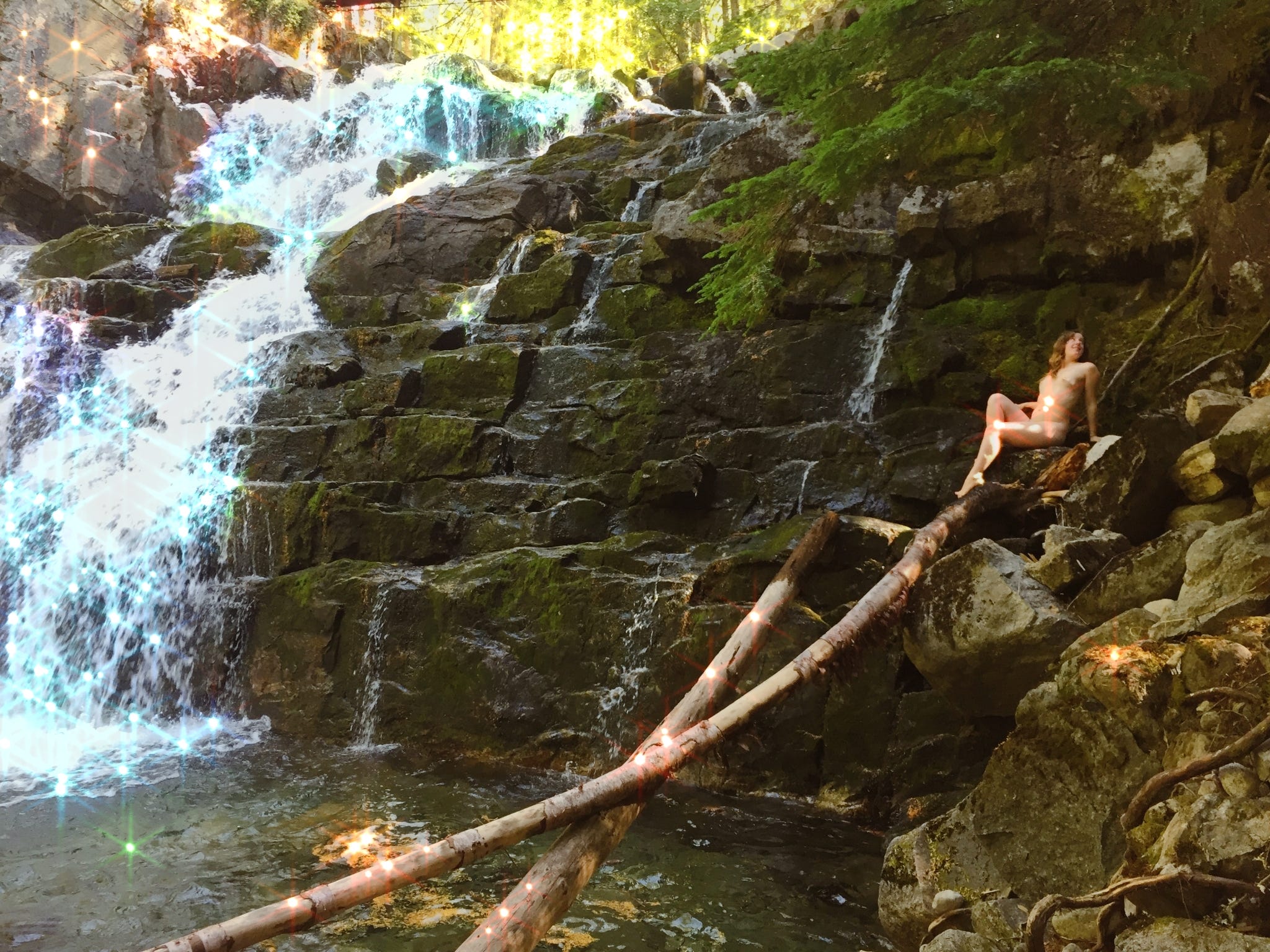
In many stories, dryads use their abilities to ward off threats such as deforestation, pollution, and other forms of environmental degradation. Their tactics generally take a mischievous saboteur approach to anyone posing a risk to their forest, but they can become formidable when trees are felled at too rapid a rate. As you’ll see later, they can also work through humans.
Because most dryads are linked body and soul to their host, they have a lot of skin in the game and will defend their home at any cost. Their well-being depends entirely on the health of that tree. If it is damaged, they suffer. If it dies, they die. This strange bond symbolizes the interconnectedness of all living things. So, for the love of tree goddesses, whoever gets drunk and hacks at all the trees around campsites, please stop. And if you don’t, beware, for the resident dryad will come after you. As in the tale of Erysichthon:
He ordered his men into Demeter’s sacred grove to cut timber for a feast hall. His woodsmen, sensing the sacredness of the place and fearing the repercussions of destroying it, refused to cut down the trees. Chagrined, the greedy king swung the axe himself. As he hacked into an ancient oak, a bloodcurdling scream filled the grove and his men fled.
The source of the horrific noise was the hamadryad inside the oak, crying out in agony as it died.
Angered, Demeter called forth the spirit of hunger, Limos and bade it enter Erysichthon’s body. There it tormented him until he had eaten his wealth away. The last time we see our once great lord, he sits in a refuse gutter picking at scraps to fill the void that will eventually consume him.
Demeter’s curse on Erysichthon strikes a powerful allegory for our current economic model that will consume the globe before it consumes us all.
Dryads as Ancestors
Akin to their tree companions, dryads have long lifespans and can weather many changes in climate if the ecosystem is strong, evidenced by this passage in the Greek epic Hesiod, The Precepts of Chiron:
“A chattering crow lives out nine generations of aged men, but a stag’s life is four times a crow’s and a raven’s life makes three stags old, while the Phoenix outlives nine raves, but we, the rich-haired Nymphai, daughters of Zeus the aigis-holder, outlive ten Phoenixes.”
In addition to conveying their lifespans, this passage reveals their divine status as the “daughters of Zeus”. Though, they are not deities:
“they rank neither with mortals nor with immortals: long indeed do they live, eating ambrosia and treading the lovely dance among the immortals but at their birth, pines or high-topped oaks spring up with them upon the fruitful earth, beautiful, flourishing trees, towering high upon the lofty mountains (and men call them holy places of the immortals, and never mortal lops them with the axe); but when the fate of death (moira thanatoio) is near at hand, first those lovely trees wither where they stand, and the bark shrivels away about them, and the twigs fall down, and at last the life of the Nymphe and of the tree leave the light of the sun together
~ Homeric Hymn 5 to Aphrodite 256 ff (trans. Evelyn-White) (Greek epic C7th or 6th B.C.)
These men of whom Homer speaks knew not to fell a sacred grove. Perhaps in time we can return to this state of knowing.
In reading of the different types of dryads in Greek mythology, I developed a particular fondness for the Meliades ~ dryads of ash trees. Their lineage is ancient - born of what could be considered a virgin birth. Gaia was impregnated by the blood of the castrated Uranus in the time before humanity was a twinkle in the eye of the gods. The nymphs emerged from the primordial earth even in the time before the Greek gods as we know them. They are, in essence, the spirit created when life sprang forth from Gaia in all its forms.
Meliades were said to have married into the human race during the silver age, or the second age of humankind. Preceded of course by the golden age, a time lost to the fall of Cronus.
For those not familiar, Cronus was a Titan who ruled the golden age. He went to great lengths to stay in power, eventually eating his own children. This infanticide was brought about by a prophecy which foretold that one of Cronus’ children would overthrow him.
Rhea tricked Cronus into thinking that a stone was baby Zeus. He swallowed it whole. Meanwhile, Zeus grew up safe in Crete. He returned to harass his father and get him to disgorge his siblings, one by one.
A whole divine family drama played out in which an outdated and aged leader refused to relinquish his throne and a war broke out. But prophecies must come to pass. Zeus defeated Cronus and replaced him as ruler of the gods.
Cue the silver age, created by Zeus in the vacancy left by the death of his ol’ dad. It was an age marked by immaturity, impiety, and conflict that was ultimately destroyed due to human folly.
Gosh, now this theme really sounds familiar. Reading these ancient myths will never go out of style. Their relevance persists.
We inherit much of our culture from Greece, the birthplace of democracy as we know it. Even its creators knew that it was doomed to fail, that it could only take us so far, and that a new age would eventually have to begin, a new system erected in the bones of the old one.
Okay, enough divine drama. Back to the dryads - the Meliades bred with humans and so we have a touch of the divine, a bit of dryad blood in us. Those who sense this, know – when we destroy the earth, we destroy ourselves. We are created and creator.
Like mycelium holding the forest together, human influence is woven into the tapestry of the physical world that enfolds us. If we choose convenience over connection to source, comfort over honoring the contract of care, we will destroy everything. I might be alone in this, but I don’t believe that’s our destiny.
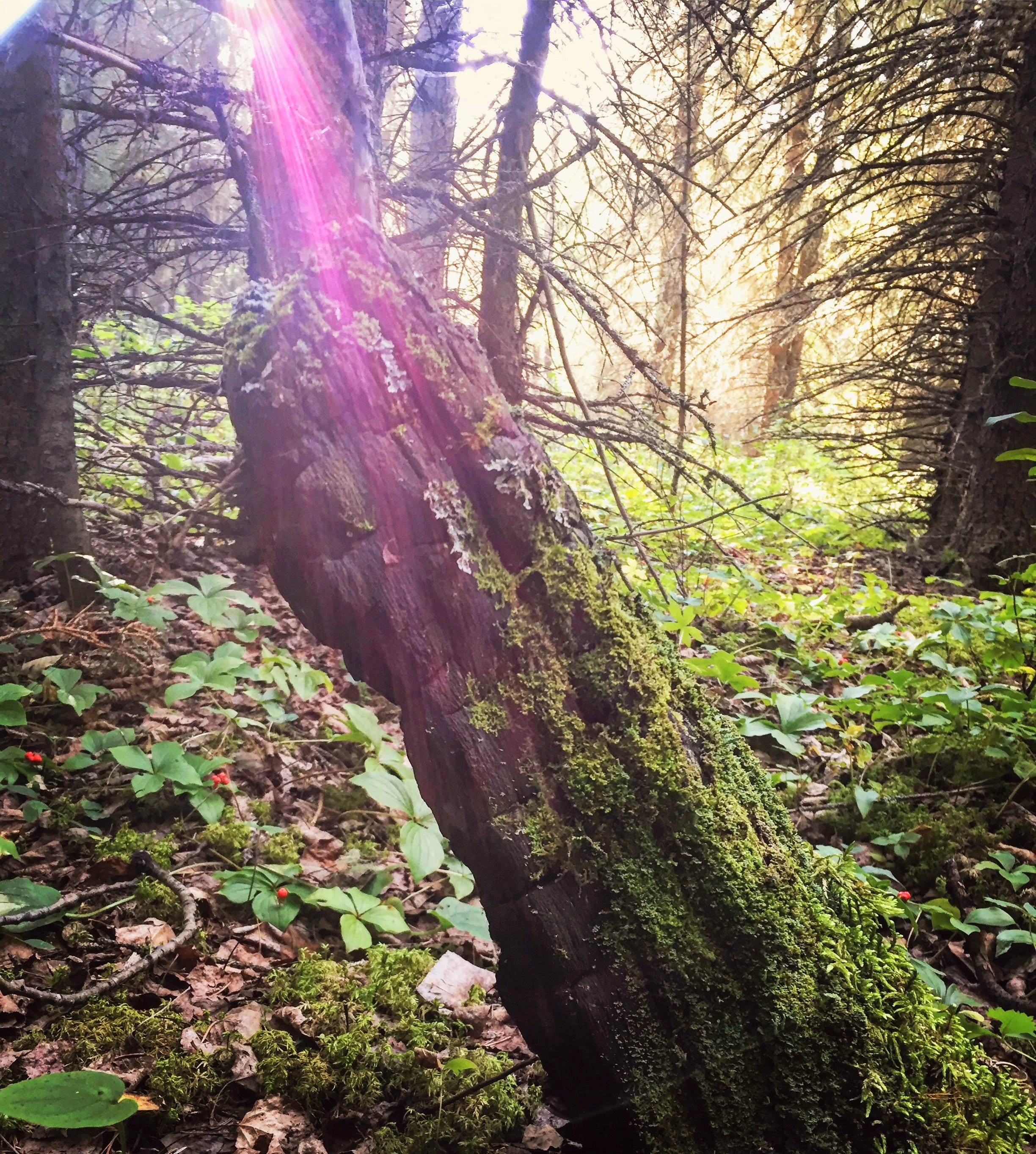
After Meliades, there are Oreades, who inhabit mountain conifers and preside over wild places. Then the Hamadryads who embody oak and poplar trees. They rule sacred groves and riparian forests that follow the winding path of rivers. The Daphne are nymphs of the laurel trees.
Daphne’s myth was made famous Ovid’s oft studied Metamorphoses. After boasting of his archery skills, Apollo was struck by a golden arrow from Eros. The arrow made him fall madly in love with Daphne. But the stars crossed for these would-be lovers when Eros struck Daphne with a lead arrow, instilling in her an aversion to love.
Woe to Apollo, who pursued Daphne so relentlessly that she prayed to escape his advances. Her father, the river god Peneus, transformed her into a laurel tree, before Apollo’s longing eyes.
In his sorrow, Apollo declared the laurel his sacred tree, vowing to wear its leaves as a symbol of his eternal devotion and to ensure its eternal youth and beauty. This myth tells of how laurel became an evergreen, and established it as an emblem of Apollo. Through the nymph and her laurel tree, humans have a direct line to the god of poetry, music, prophecy and the arts.
Greek and Roman societies adopted the laurel as a symbol of triumph and honor, particularly in athletic and poetic contests. To this day, a crown of laurel is used to honor accomplishments.
In another tale told in many different ways, we are transported to a party of epic proportions. A Dionysus inspired revelry which sees all in attendance getting incredibly sloshed. A satyr, lets call him Pan because you will recognize him, spots a lovely nymph and is overcome with lust.
She behaves as every nymph must. She playfully evades him. He persists. She gets fed up, calls for help and is transformed into a bed of reeds. His desire thwarted, he makes a set of pipes out of the reeds. And now all who hear music from his magical piping have desire evoked within them.
Satyrs and nymphs are frequently found frolicking together through the mythic landscape. They represent the archetypal masculine and feminine aspects necessary for creation - the desire and the nurturing.
These are only a few of the tales I could find. There are as many nymph containing myths as types of tree. Each one conveys the relevance of its resident tree to the culture of the Greeks and the influence of supernatural forces. Nymphs make the sacred accessible and relatable to the human experience. We’ve all felt moved by the spirit of a wild place.
Though they live within individual trees, they have movement and agency and act on behalf of the ecosystem. Many of these nymphs were associated with the health of the broader ecosystem which their affiliate tree is immersed in, conveying the belief that no lifeform can stand on its own or live forever. Even mighty trees thrive only in relation to their community. Even gods must fall.
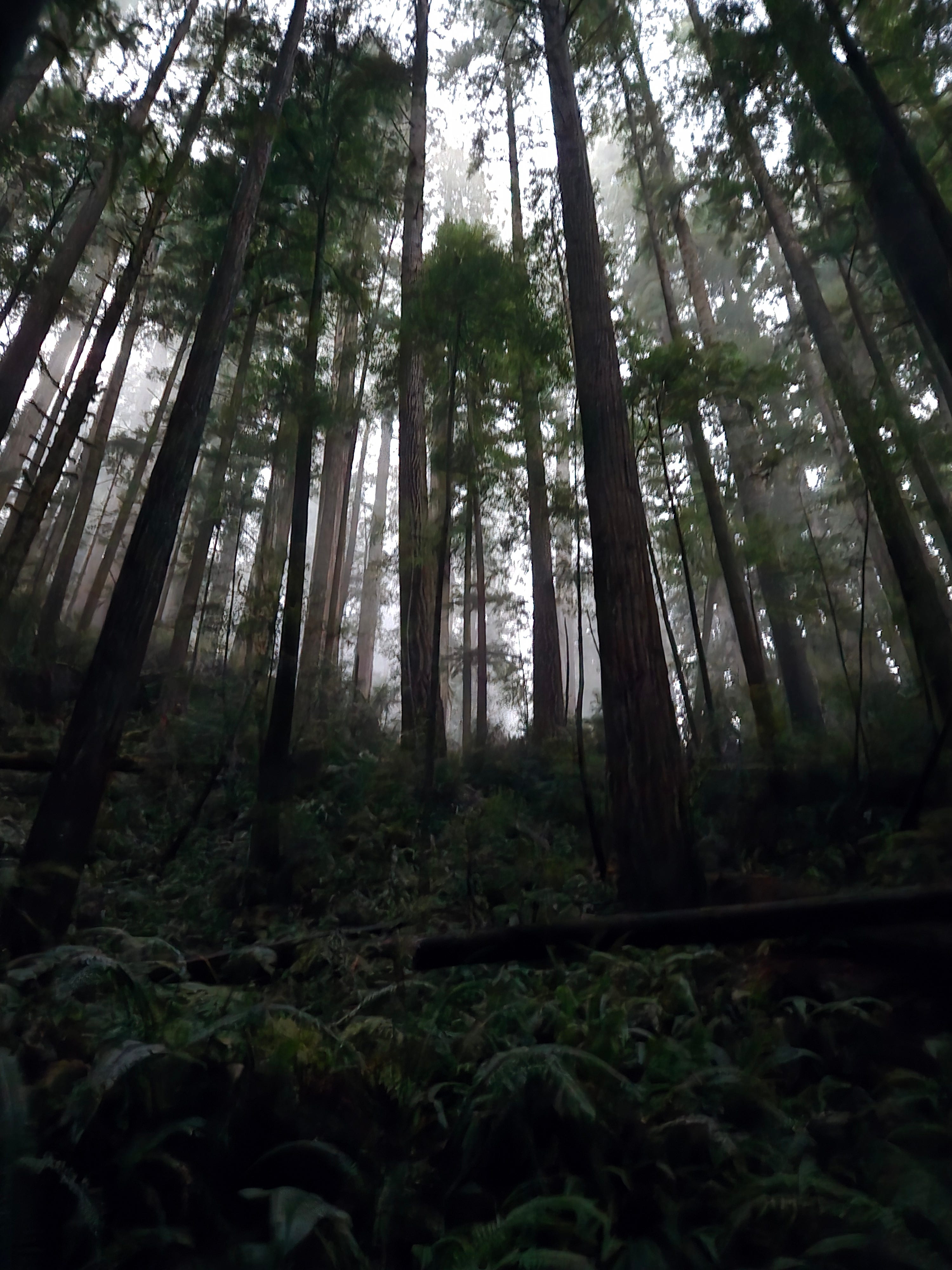
How Did Dryads from Ancient Greece End up in Celtic Myths?
Short answer, colonization. Teachings from Greece fanned out across the lands conquered by the Roman Empire.
It makes abundant sense that the Celts would have adopted dryads into their belief system. It wasn’t a colossal leap, they already considered trees sacred. Certain types of tree were protected due to the belief that they contained spirits and had value distinct from being sold as timber.
In Ireland, an 8th century legal tract called Bretha Comaitchesa, which means Judgements on Neighbourhood, expounds the law governing relations between neighboring farmers. In this tract, trees have a section all their own. Each tree is grouped into a legal class with varying degrees of punishment inflicted on anyone who fells one.
Cutting down an oak, a Scots pine, a hazel or any of the other airig fedo or chieftains of the wood, saw the offender fined two milk cows and one heifer. Lower classes of tree had decreasing fines of cows or sheep owed to the powers that be or to the offended neighbor. As we learned from the chapter on Witches Butter, dairy producing livestock meant wealth and health. Giving up a milk cow would be a huge blow to a family’s well-being.
While these laws were more concerned with the rights of the person to whom the tree belonged, they consider the trees more valuable alive than dead. In some senses, it feels that society is coming full circle. As we discuss the legal rights of animals, of rivers, mountains, and forests. The discussion has gone mainstream through advocacy of indigenous groups who count these “inanimate objects,” (as they are considered by the colonizing culture), as kin worthy of protection.
The conversation has moved from tribal circles to courtrooms and houses of government. It’s due time too, as we face what feels like a landslide of ecological issues. Perhaps the dryads will guide the humans with decision making power to a balanced approach which serves both human and non-human communities.
From the Cradle to the Grove
From myth and law, art, and cosmology – the stories through which they interpreted the world, we can trace the tree as a sacred place holder among Gaelic peoples. Many Celtic tribes held trees as clan totems and adopted their names. Two examples of such are the Fir na Craibhe, men of the Creeve, so named from the Gaelic word Craibhe meaning tree or branch, and the Eburones, people of the yew.
In addition to the names, the tree would often figure prominently in the clan’s lore. The Giuthas, or Fir, MacDonalds of Braemar drew their namesake from a tale in which the clan's founder spent time hiding among the fir trees as an outlaw.
Many clans also adopted badges portraying plants or trees to symbolize their kinship. These badges could be a spillover of the tradition of the bíle (pronounced BEE-leh) as representative of ties to tribe, identity, the Otherworld, and the strength and fertility associated with the tree. Bíle is an old Irish word meaning sacred tree. The bíle held the spirit of the tribe, the tribal lands and the lineage of chieftains and kings it saw inaugurated under its branches. This spirit was passed to the new ruler in a ritual in which the king would swear to abide by standards of good rulership, after which his lineage and his life would be bound to land and tribe with a branch cut from the bíle.
Destroying a rival tribe’s bíle was considered a declaration of war. An example of this is found in the 12th century chronicle the Life of Saint Flannan of Killaloe. A dynasty symbolically begins its hostile takeover with an attack on the tribal yew tree. The destiny of a clan is often twinned to that of the bíle. In songs or poems from the time, the felling of the tree would foretell the destruction of the clan or the hostile takeover by an invading power.
Further, of the twenty primary letters in the Ogham alphabet, eight are tree words. Medieval historians collectively called the letters feda, meaning tree. However, in reality the assertion that the language is botanically originated was formed not in the time of Celtic tribes, but by Medieval scholars hunched over plundered chronicles, and it snowballed from there.
The tree calendar based around the Ogham alphabet was developed by Robert Graves in 1961, who wrote a book which correlated the lunar months with trees and the trees with the thirteen consonants and five vowels of the Celtic writing system. While this is a recent development, there is enough evidence of their reverence for sacred groves recorded by Tacitus, the Roman historian, to prove that a sense of trees as protectors and amplifiers of spiritual energy was central to their ritual practices. The grove was the cradle of the Celtic race.
What Do These Old Tree Lovers Have to Do with Us, Comfortable in our Cities with Pruned Hedges and Clipped Lawns
Deforestation and environmental degradation can have a profound impact not only on the physical world but also on folklore inspired by dryads. As forests disappear, so too does our connection to these landscapes, leading to a loss of cultural heritage. As our tales of dryad’s evolve, they have come to evoke sadness and a longing for reconnection with the natural world.
Contemporary conservationists, artists, writers and activists draw inspiration from the dryads of lore. By invoking guardian spirits, these tree-hugging folks aim to emphasize the importance of intact, biodiverse and thriving forest ecosystems and the need for sustainable practices that honor the wisdom of our ancestors, who knew beyond a shadow of a doubt that there was a spirit in every tree, every mound of moss, every animal, every mushroom, bloom and blade of grass. Why do we now doubt that?
I recently read an autobiography of a woman who has become a modern-day myth in environmental activist circles. Some say she has the spirit of a dryad. The book, titled The Legacy of Luna, tells the tale of Julia Butterfly Hill. She devoted herself to a wise, old redwood named Luna and, like a dryad, bound her fate to that of the tree. She lived in a platform high up in this coastal redwood for two years, refusing to come down until the logging company that was hacking its way up the hillside promised to preserve Luna’s life.
Despite the personal suffering she endured, in an interview Julia says “the worst part of it was when they were cutting all the trees down.” The thousand year old redwood she lived in ended up surrounded by clearcut. So as she bonded with one tree, all of Luna’s kin fell to the earth. She said she felt the chainsaws biting as though they were going through her own body. When they drove the wedge in, she flinched with every tap of the sledgehammer. And when the tree fell, she said it screamed all the way to the earth. It must be quotes like this that made people call her a dryad. That and the fact that she lived in a tree.
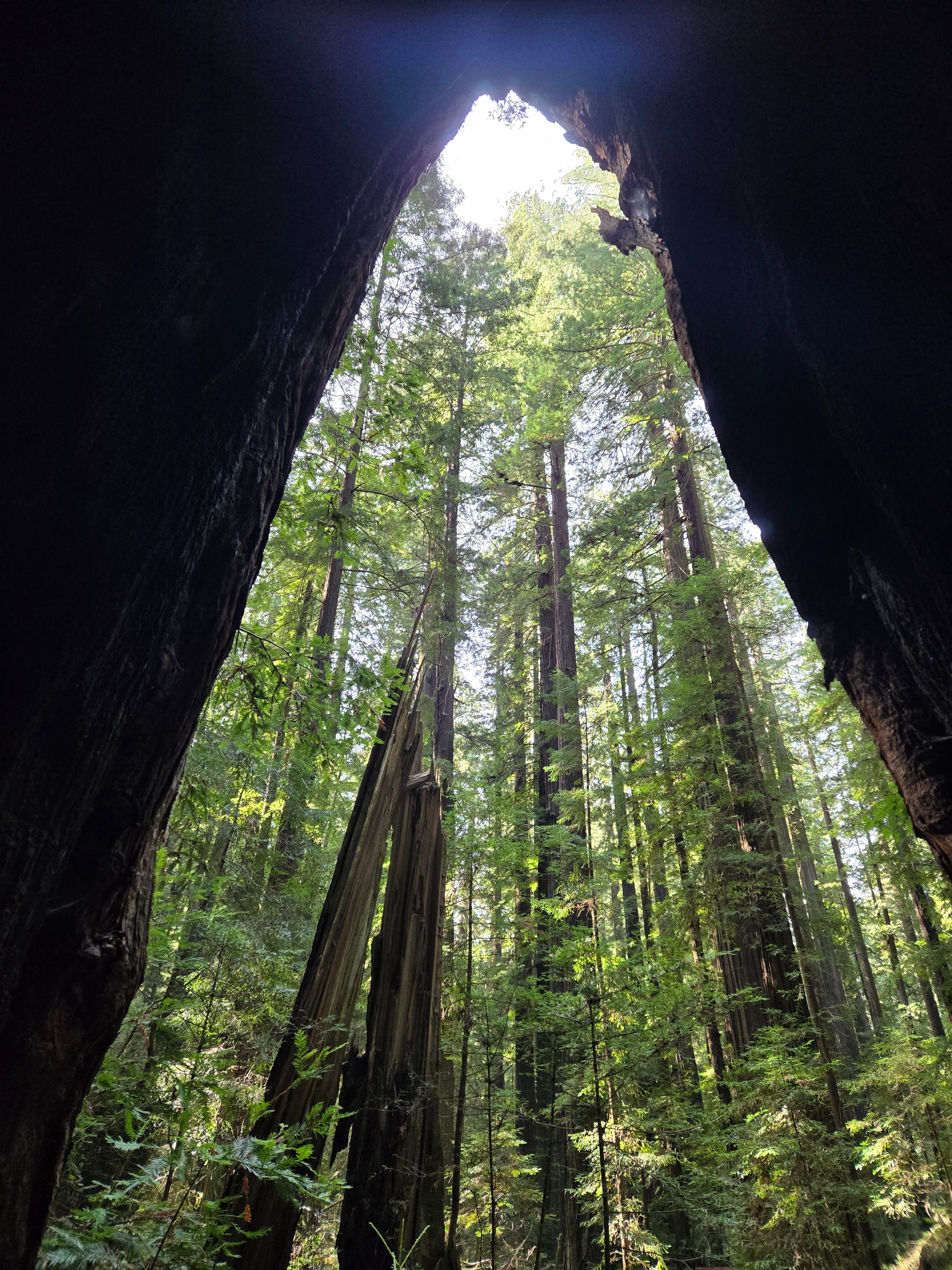
On my recent trip through the famous California coastal redwoods - the ones from Julia’s tale of humans speaking on behalf of trees - I couldn’t help but notice their ability to strike even the most noisy and distracted human into awed silence. I personally have wanted to visit them since I was a wee lass. I’d encountered the massive stump of a dead redwood and was distraught, saying “the tree is crying.” To cheer me up, my uncle handed me a photography book to soothe my sorrow. Yes, I’ve been training for this my whole life. Destined to be a tree hugger extolling the virtues of living forests.
After my visit I am now certain that there are spirits living within that striking auburn wood that speak directly to the human soul. There is something of the ethereal in the way these giants call people from all around the world to stand among them and remember a time when ancient ecosystems were unaltered by humans, when we were humbled daily by our environment. I’ve no doubt they called all those activists there in the mid-nineties. Many came willing to lay their lives on the line to protect them.
The spirit of the dryad lives on in some of us. Though the spirit of hunger is hard at work consuming many in our species.
Ecology > Economy
You see, a clearcut is the quickest and easiest way to harvest timber. An entire hillside can be cleared in weeks, the remaining brush burned with napalm and fire, before it is replanted with monoculture seedlings that will be the logging company’s future harvest. An efficient use of a renewable resource, right?
If we’ve learned anything from economists over the years, it’s that cheap usually means the cost has been displaced. It doesn’t disappear, it shows up down the line. Someone is always paying the price. In this case, it falls on everyone who relies on the forest ecosystem for life. From the top predators, to the insects, the fungi and bacteria, to humans who live downstream and fish who live in waterways lining clearcuts.
First, it’s the slow leak of chemicals into the water from the blast of napalm. Then rains and wind wash silt into the river and choke its capacity to bear life. Heavier rains still can collapse the stripped hillsides. Which is what instigated the activist movement that propelled Julia Butterfly Hill to fame. The mountain, no longer supported by the web of the forest, buried the town of Stafford, California and drew national attention.
A company by the name of Pacific Lumber had been operating in the area for a century. It owned most of the hills around Stafford and had been employing most of the valley through its existence. The family-owned company had a policy of selective logging and hoped for a sustainable future.
Unfortunately, Pacific was trying to operate in an insatiable system, and sustainability often leads to higher cost of operation. The debts piled up. A Texan rolled in, bought the company with junk bonds, and started harvesting the purchased assets at an alarming rate.
If we’ve learned anything from ecologists over the years, it’s that altering ecosystems on a grand scale leads to irrevocable changes. The least of which is unsightliness, the most of which is not yet measured by human terms of reference but includes extinction, biodiversity loss, and climate change. Like in the Greek tale of Erysichthon, the entity we feed has a bottomless hunger. The destruction must be slowed or ecosystems will collapse.
Cue the tree huggers. If you’ve ever hurled this word as an insult, or had it hurled at you, did you ever wonder where it originated?
The term tree hugger was coined following the Chipko movement in India in the 1970s. Chipko means, to cling in Hindi. And that is exactly what this group of peasant women in Northern India did, they threw their arms around the trees designated to be cut down and clung to them, no matter the risk. Word of their success spread and more people took to the trees. The movement succeeded in forcing the government to declare a moratorium on logging in the Himalayan regions.
This movement in turn was inspired by the group of villagers from the Bishnois branch of Hinduism. In 1730, a palace was slated to be built using the trees surrounding their village. Tragically, many of these people were slaughtered. Without modern laws to protect them, their fate was far different than most environmentalists today, who merely get roughed up, threatened and arrested.
Their sacrifice was not fruitless; it led to a royal decree prohibiting the cutting of trees in any Bishnoi village. In modern India, those villages stand as forested oases in an otherwise desertified landscape.
Perhaps the Bishnois in turn were inspired by the Nymphae of Greek lore. Some humans will always be hell-bent on destruction for the good of progress. Some will always be opposed to destruction for the sake of progress. Clashes will continue to happen until we return to a cohesive outlook in which harmony is maintained, resources are appreciated and shared, and value is placed on ecosystem health.
So, never, you say?
I still believe. I’m a ruthless optimist.
Where to Gallop to Find the Legendary Dryad’s Saddle
It thrives in temperate woodland ecosystems, where it plays a significant role in the decomposition of hardwoods. Its metabolism is saprobic and occasionally parasitic, helping usher an ailing tree into its next phase of existence.
The mushroom prefers moist environments and is typically found on dead logs, fallen branches, and stumps, though it frequently appears on upright standing dead trees. It often colonizes deciduous hardwoods such as elm, ash, sycamore, poplar, willow, and maple trees. Its range covers much of the Northern Hemisphere, including North America, Europe, and parts of Asia.
In short, there aren’t many places in this wide world that you won’t gallop upon a dryad’s saddle. As long as there are healthy forests near you, you have the chance to find this curious fungus.
How to Know if You’ve Galloped Your Way to a Dryad’s Stable
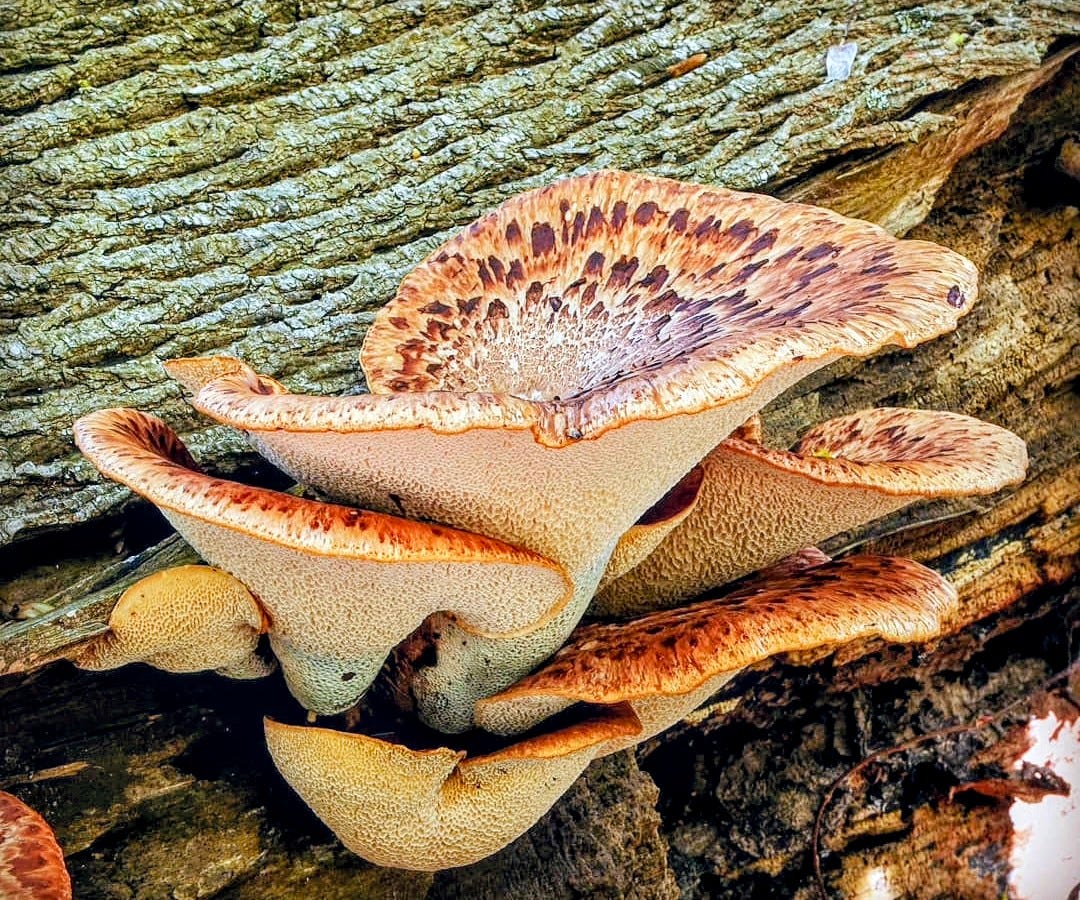
Polyporus squamosus, now Cerioporus squamosus, commonly known as Dryad’s Saddle. In a rare instance of the scientific community paying homage to the common name, the binomial for dryad’s saddle comes from Greek roots. Cerioporus comes from kērios meaning wax and poros meaning pore or passage. It may just be the power of suggestion, but I do find the pores of this fungus to feel particularly moist and waxy.
Its fruiting body forms brackets that are semi-circular or fan-shaped, often layered atop each other along decaying hardwoods. Even a mildly observant human can’t miss it due to its unique and striking features.


When young they look like bottle corks. When they grow large, they really mean business; their caps ranging in diameter from 10 to 60 cm. They are tan colored with prominent brown scales, giving them a feathered appearance which evokes its other common name: pheasant back mushroom. The fungi’s plumage in turn inspired the species name squamosus, which translates to scaly.
So, a saddle-shaped fungi with a feathered tail has caught your eye. What now?
First, you must scan the area for signs of a dryad. Remember to move with reverence, they still have the capacity to harm any human who bears a reckless and destructive nature. Look for hair tangled in the branches of the surrounding trees. They are likely to be hiding from you and the canopy is their preferred perch. But perhaps you display enough of the type of watchful awe that such spirits reward with presence. If they don’t reveal themselves to you, try again another day when your spirit exudes calm.
Today, ascertain whether the tree chosen as a dryad’s stable is one typically known to house dryad’s saddle. They favor hardwood – elm, boxelder, ash, and maple. If the dryads have taught you anything it’s that learning about one character in the forest requires you to learn about all of its neighbors as well. If you really want to excel at mushroom hunting, you’ll get really good at identifying trees.
If it is one of the listed trees that you stand beneath, take a seat. Word has it that sitting on a dryad’s saddle allows you to communicate with the spirit of the wood. Unless you have a shrink ray or a hefty dose of fey blood, sitting astride won’t be possible. So sitting beside will have to do. Place a hand on one of the saddles and open your heart to any messages they have for you. They will come in the form of images, a fleeting song, a whispered poem or the fragment of a thought.
Now, with curiosity, which was highly valued by the Celts, and reverence, which is essential for reconnecting with the natural world, pluck a specimen from its hold on the tree. You won’t be punished if you have a curious heart, I assure you.
Take a careful look at the stem. Is it darker than the rest, quite short and off-centre? Good.
Examine the pores. Are they tightly packed and smooth, even waxy to the touch?
You’re on the right track.
With your knife, slice a cross section through the cap. Is the flesh thick and white? Perfect.
And, don’t let me forget, one of the greatest joys of the fungal world is that it activates all five senses and beyond, reminding us that there’s more to this world than meets the eye. The best way to be sure that you’re standing in a dryad’s stable is the smell. No, not like a human stable full of horses and cattle, scented with sweet decaying hay and grass-laden feces. It smells like a dryad’s stable – notes of cucumber and watermelon rind.
Thank the resident dryad. It is because of their diligence that you have any forest left to forage in.
Can You Eat It
Edible and quite delicious. There are no known side effects from eating this mushroom and no poisonous look-a-likes either.
They are found abundantly in the spring and they can be quite delicious when they are fresh but only for a short window of time before they become tough and inedible.
Celtic Dryads: The Guardians of the Ancient Forests of Ireland and Britain - Mythology WorldWide
Dryad’s Saddle (Polyporus squamosus)
DRYADS & OREADS (Dryades & Oreiades) - Tree & Mountain Nymphs of Greek Mythology
I love this! One of my favorites to forage in the spring. This year I'll try sitting with the tree and mushroom before harvest.
Kitty, this piece truly amazed me. There is something ancient and alive in your words — not just storytelling, but remembering.
I guide forest meditation walks myself, and when I used to wander alone, there were lights that led me, and clearings where I knew I must not step — because something sacred was already there, as if fairies were dancing. Reading you, I felt that same quiet, knowing presence again.
Here in Central Europe, I keep encountering clear-cut forests. For a long time, I told myself: this is not my path. And then, suddenly, it was. I accepted the call — and through your writing, I understood something profound: it was a nymph calling.
Since then, I’ve been helping coordinate a grassroots forest protection movement. We organize like the forest itself — no hierarchy, no rigid structure, just mutual support. We collaborate in harmony with organizations like WWF and Greenpeace. We work in two ways: through communication, and by guiding people into the forest so they can directly experience its magic — so they too can be touched by the nymphs.
In just one year, we’ve reached roughly a quarter of local voters — millions of people — and now we have a shared strategy to stop local clear-cutting. With zero violence. With something closer to a tree-and-human embrace.
Thank you for this deeply inspiring, almost initiatory piece. It stays with me.